Key takeaways
- Most projects take roughly 8 to 16 weeks from discovery to store launch. Simple apps can be faster and complex platforms take longer.
- Scope, integrations and the number of platforms move the timeline more than anything else.
- Fast projects share a pattern: a clear first release, quick decisions and early testing with real users.
- Plan for review time. App Store and Google Play reviews are usually quick, but a rejection can add days.
Almost every founder asks the same thing in the first call: how long will it take? The honest answer is a range, because the timeline depends on what you are building. The useful answer is what drives that range, so you can shape the project to land where you need it.
A realistic timeline
Most mobile projects with a sensible first scope take about 8 to 16 weeks from the first workshop to the store. Here is how that time usually divides.
1. Discovery and planning (1 to 2 weeks)
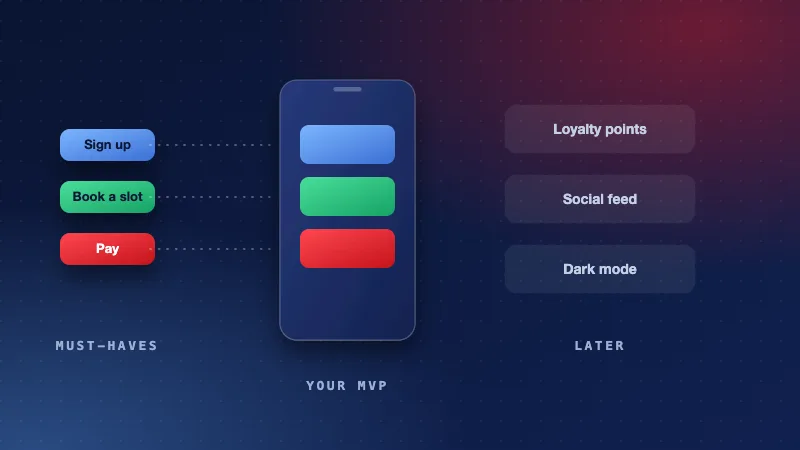
We define goals, users and the smallest useful first release. You leave with a prioritised feature list, a technical approach and a confirmed estimate.
2. UI and UX design (2 to 4 weeks)
Wireframes become a clickable prototype you can test with real users before any code exists. Changing a screen here costs hours. Changing it after development costs days.
3. Development in sprints (4 to 8 weeks)
The app is built in short sprints, and you see a working build every one to two weeks. Backend, APIs and integrations are built alongside the screens.
4. Testing and launch (1 to 2 weeks)
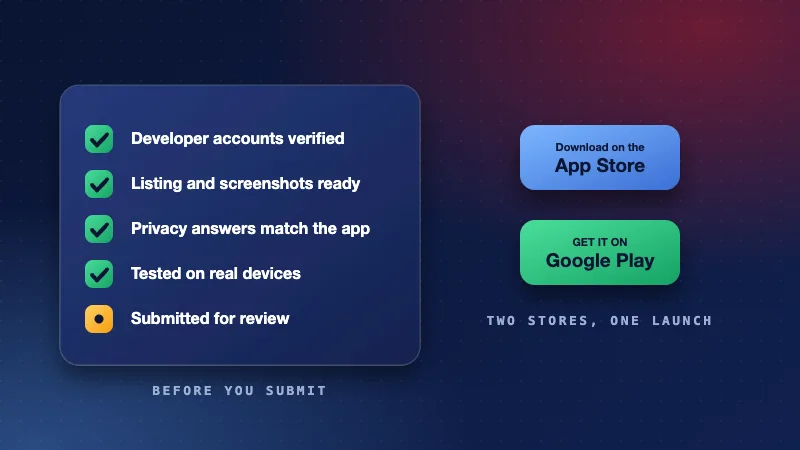
Quality testing on real devices, performance and security checks, store listings, and submission to the App Store and Google Play.
Store reviews are often fast, but rejections happen. Build a few days of buffer into your launch date.
What stretches the timeline
- Scope creep. Every extra feature added mid-project adds time. A written list of what is out of scope helps as much as the list of what is in.
- Integrations. Payments, third-party APIs and legacy systems bring unknowns. Early technical checks reduce surprises.
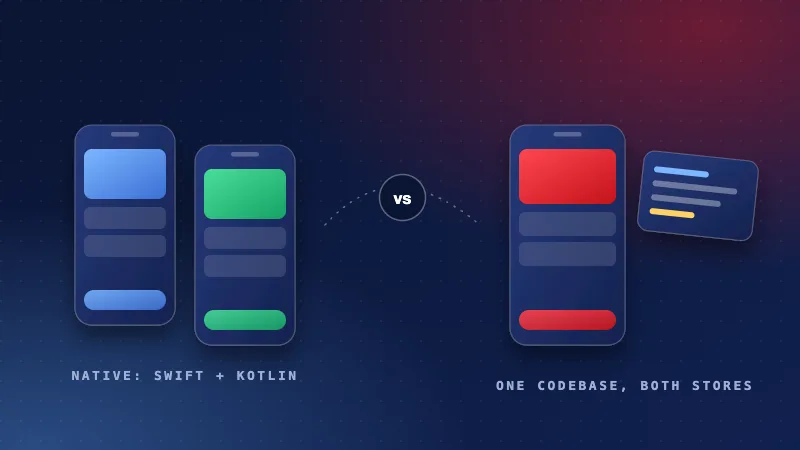
- Two platforms. Native apps for both iOS and Android take longer than one cross-platform codebase.
- Slow feedback. Waiting days to approve a design or answer a question pauses the whole team.
- Compliance. Healthcare, finance and other regulated areas need extra design and testing time.
How to launch sooner
- Define a first release that proves the idea, then add features based on real usage.
- Choose a cross-platform approach when it fits your product.
- Name one decision-maker who can answer questions within a day.
- Test the prototype with five real users before development.
- Release to a small group first, then widen once the basics are solid.
Published November 2, 2026.